The Benefits of Smart Vending Machines or Modern Workplaces
Benefits of Smart vending machines for the workplace are connected vending units, micro markets, and smart coolers that track their own stock, accept cashless payment, and get restocked based on real usage instead of a fixed weekly guess. For offices, warehouses, and healthcare facilities, that means fewer empty machines, less manual upkeep, and a breakroom that runs on its own.
Most complaints about a workplace breakroom aren’t really about snacks. They’re about a machine that ran out three days ago, or the one drink option someone actually likes never being in stock. Smart vending fixes that quietly, without adding anything to anyone’s to-do list and this guide covers what that actually looks like day to day, not just the hardware behind it.
Who This Actually Helps
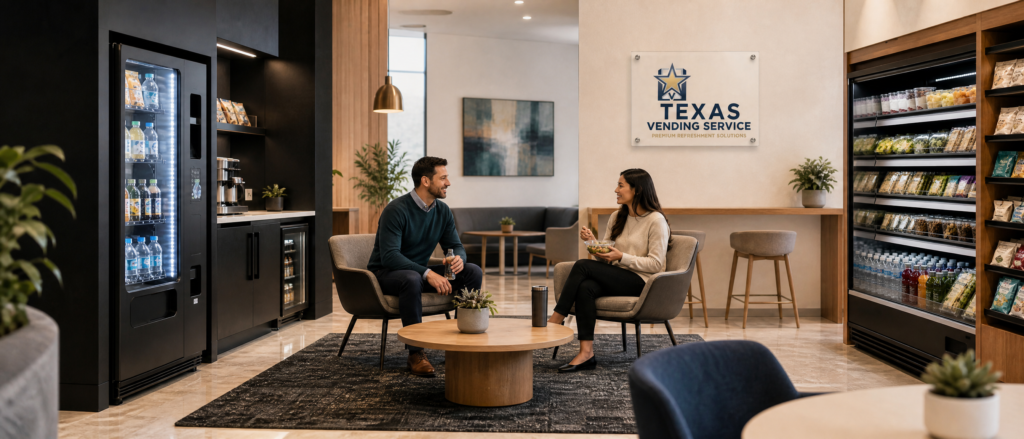
This is written for the person who ends up owning the breakroom decision, even if it’s not officially their job as an office manager, an HR lead, or a facilities coordinator juggling a dozen other responsibilities. It’s also relevant for operations managers at warehouses, clinics, and manufacturing sites, where “9-to-5” doesn’t describe the workforce.
If any of this sounds familiar, the sections below are for you: fielding complaints about an empty machine, coordinating with a vendor who’s slow to respond, or trying to add healthier options without overhauling the whole setup.
The industries that benefit most tend to share one trait: people spend real time on-site, whether that’s an 8-hour office day, a 12-hour hospital shift, or a warehouse floor running around the clock. In each case, the breakroom stops being a nice-to-have and becomes part of how the day actually runs.
The Real Cost of an Unreliable Breakroom
An outdated or unreliable vending setup has a cost, even when it never shows up on an invoice. An employee who leaves the building for a coffee run because the machine is empty again isn’t just missing a snack they’re losing ten or fifteen minutes, plus the walk back. Multiply that across a team, a week, a year, and it adds up to real time.
There’s a second cost that’s easier to miss: whoever manages the breakroom becomes the default contact for every complaint about it. A slow vendor, a broken machine, a stale product line all of it lands on one person’s plate, on top of their actual job.
None of this is dramatic on its own. A single empty machine isn’t a crisis. But it’s the kind of small, recurring friction that quietly shapes how people feel about coming into work, and it’s also entirely avoidable with a setup that tracks its own stock instead of relying on someone noticing.
Supporting Every Shift, Not Just Standard Business Hours
A staffed cafeteria runs on set hours. A vending setup doesn’t care what time it is. That matters most for workplaces that don’t run a standard schedule: hospitals, warehouses, and manufacturing floors where someone is always on shift, and a locked kitchen at 2 a.m. isn’t much of a benefit.
This is especially relevant for warehousing, manufacturing, and hospital environments, where breaks don’t line up with a typical lunch hour, and where round-the-clock access is closer to a requirement than a perk.
Round-the-clock access also removes an equity problem that staffed food service quietly creates. When a cafeteria only runs daytime hours, the night shift ends up with worse options by default, even though they’re doing the same job. A vending setup that’s stocked and monitored the same way at any hour treats every shift the same.
Wellness and Variety, Without the Tradeoff
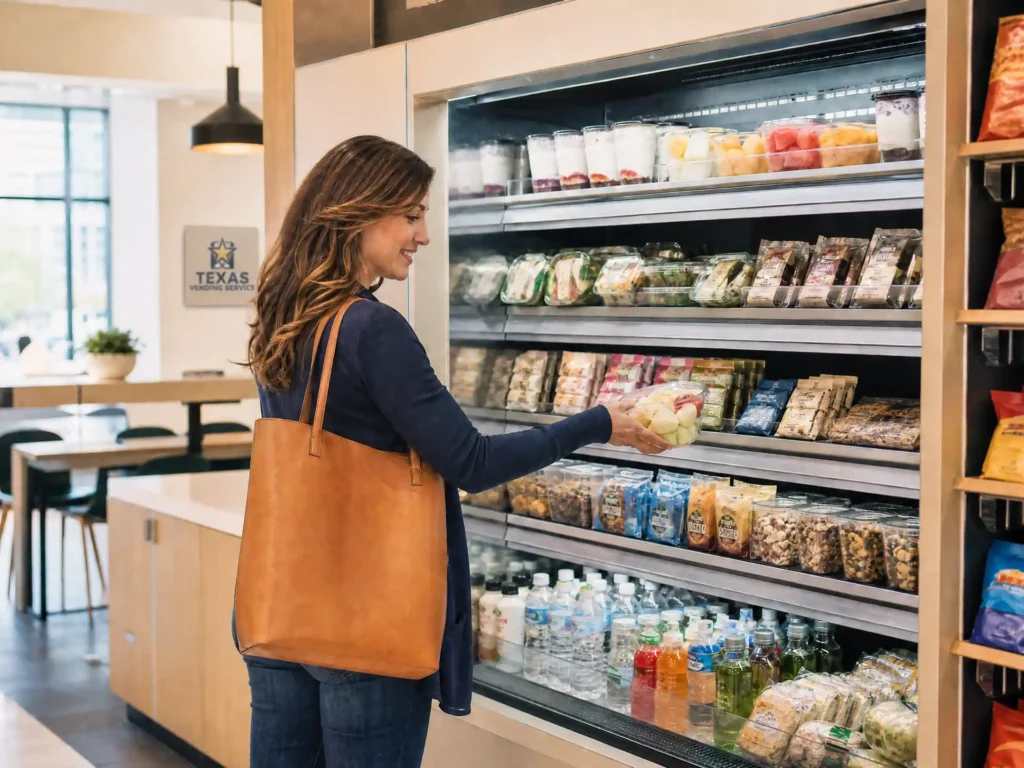
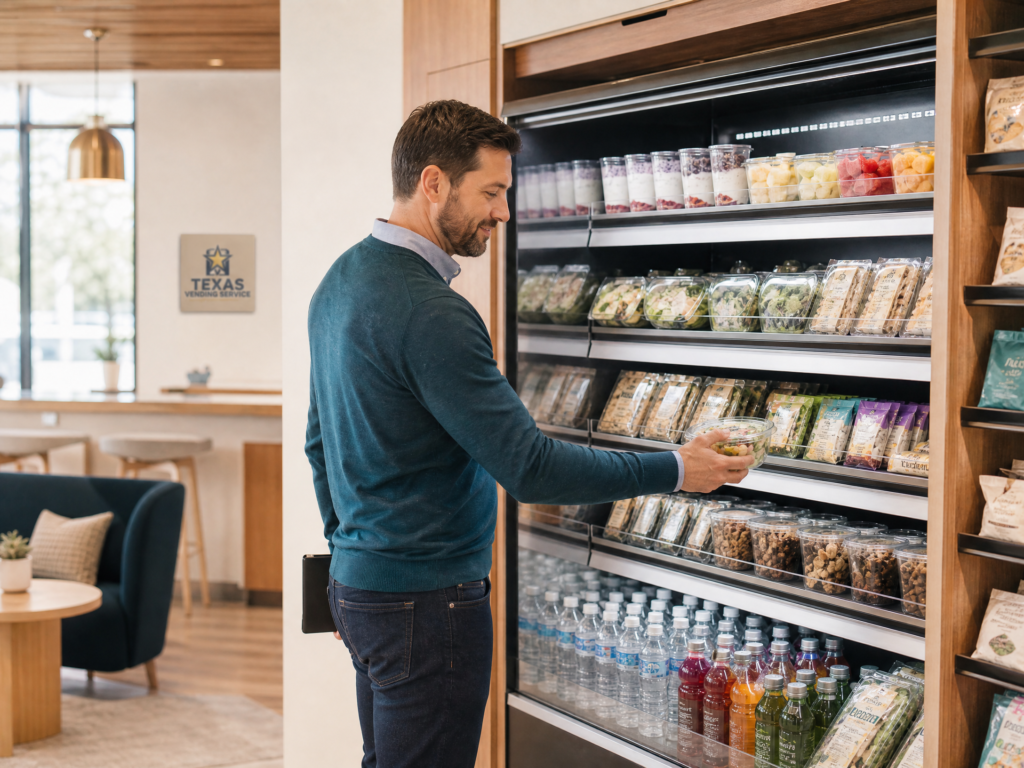
Workplace wellness expectations have moved past a bowl of apples by the coffee machine. A modern setup can hold lower-sugar drinks, protein-forward snacks, and fresh options right alongside the usual chips and candy without turning the breakroom into a debate about what should and shouldn’t be there.
Texas Vending Service’s Healthy Options lineup and Micro Markets are built around exactly that room for both, not a tradeoff between what people want and what’s good for them.
This matters beyond individual preference, too. A workplace with a genuinely mixed product selection is easier to stand behind when someone asks what the company actually offers for wellness versus a machine that’s all chips and soda with a token granola bar pushed to the back
Less Waste, With No Extra Effort Required
Restocking based on actual demand, instead of a fixed weekly guess, has a quieter side effect: less waste. Fewer perishable items sit past their freshness window, and fewer trips get made to locations that didn’t need one yet. It’s not a headline feature of smart vending for the workplace, but it adds up over a year, and it happens automatically nobody has to request it.
One Less Vendor Relationship to Manage
None of the above requires anything from the person running the office. There’s no inventory to track, no vendor to chase for a repair, and no ordering to remember. The provider’s team monitors and restocks the machine directly the office manager’s actual job is to have made the decision once, and then not think about it again.
The mechanics behind how that monitoring works the sensors, the alerts, the remote diagnostics are covered in detail on our smart vending technology page; this guide focuses on what it means day to day rather than how the hardware does it.
Is It Worth Switching From a Traditional Setup?
For most workplaces with steady daily traffic, the honest answer is yes mainly because the switch doesn’t ask anything of the business. In a managed placement arrangement, there’s typically no equipment cost and no contract lock-in, so the comparison isn’t really “old machine vs. new machine” as much as it’s “who’s actually managing this for you.”
The exception is a location with very light, inconsistent foot traffic, where any vending setup smart or otherwise may not see enough use to justify a dedicated machine. A provider can usually tell you honestly whether a space is a good fit during an initial site visit, rather than after the fact.
A Small Signal That Adds Up
No single amenity fixes company culture, and a vending machine won’t be the reason someone stays in a job. But a breakroom that’s stocked, working, and up to date is a small, constant signal that the workplace pays attention to daily comfort and an empty, broken machine sends the opposite signal just as clearly, every day someone walks past it.
Smart Vending vs. the Old Breakroom
The clearest way to see the difference is side by side not in specs, but in what actually changes for the people dealing with it day to day.
| Old Breakroom Habit | Smart Vending for the Workplace |
|---|---|
Machine runs empty, nobody notices until an employee complains | Restocked based on real usage before it runs out |
Cash only, or a card reader that half-works | Tap-to-pay and mobile wallets, every time |
Same snack lineup for years, no one asked what people want | Product mix adjusted to what your team actually buys |
Office manager fields the complaints and chases the vendor | Provider handles restocking, service, and monitoring directly |
One-size-fits-all machine regardless of the team | Vending machine, micro market, or smart cooler matched to your space |
What to Look for When Choosing a Provider
Not every “smart vending” provider offers the same depth of service. Before choosing one, it’s worth asking a few direct questions: does the machine support cashless payment at no extra fee, does the provider actually use sales data to adjust the product mix over time, and is maintenance handled proactively or only after something breaks.For the full list of questions to ask any Texas provider, see our complete guide on how to choose a vending service in Texas
It’s also worth confirming who owns the equipment, whether there’s a long-term contract, and whether the product selection can be customized to your team rather than a standard catalog. A provider who can answer all of that clearly, in one conversation, is usually the safer choice.
One more thing worth checking: how a provider actually finds out about a problem. Some rely entirely on someone reporting it, which puts the burden right back on your team. Others monitor the equipment directly and catch issues before anyone notices that difference matters more day to day than almost anything else on this list.
Choosing the Right Machine Type for Your Team
The right setup depends on the team, not just the available space. A smaller office might do fine with a single combo vending machine, while a larger team may get more use out of a micro market with a wider selection, or an AI smart cooler for a fast, grab-and-go option.
See Vending Machines, AI Smart Cooler, HAHA Smart Cooler, and Coffee & Water Service to compare what fits your space and team size.
It’s fine not to know the exact answer before reaching out. Most of this is decided during the site visit, once a provider has actually seen the space, the traffic pattern, and the team size guessing in advance usually isn’t necessary.
For a wider self-service setup, our sister company, DFW Markets, specializes in micro market installations across the metroplex.
What Getting Started Actually Looks Like
Adopting smart vending for the workplace is generally simple from the business’s side. A provider assesses the space, recommends the right equipment, and handles delivery, setup, and testing — typically with no construction required. From there, the technology runs in the background; the business doesn’t need to manage a dashboard or interpret sales data unless it wants to.
It’s worth setting expectations early with whoever will field questions internally usually the office manager or HR lead. A short heads-up (“the machine is being swapped, here’s who to contact if something’s wrong”) avoids the awkward stretch where employees don’t know whether to report an issue to the old vendor or the new one.
Frequently Asked Questions
What are smart vending machines for the workplace?
They’re connected vending machines, micro markets, or smart coolers that track inventory in real time, accept cashless payment, and get restocked based on actual demand rather than a fixed schedule.
Does a smart vending machine cost more to use?
Not for employees pricing works the same as a standard machine. For the business hosting it, a placement provider typically owns and maintains the equipment at no added cost.
Is smart vending worth it for a smaller office?
Often, yes. A smaller office may just need a single combo machine rather than a full micro market the core benefit, reliable stock and less manual upkeep, applies at any size.
Can employees request specific products?
Yes, in most managed setups. Product selection is typically adjusted over time based on what a location actually buys, and providers are usually open to direct requests as well.
How does smart vending help with multiple shifts?
Vending doesn’t run on set hours the way a staffed kitchen does, so night and weekend shifts get the same access and the same stocked machine as a standard daytime shift.
Does it actually reduce the office manager's workload?
Yes in a managed placement arrangement, the provider handles restocking, maintenance, and monitoring directly, so it isn’t something added to anyone’s internal task list.
What should I ask before choosing a provider?
Ask whether cashless payment is included at no extra fee, whether the product mix is adjusted based on real sales data, and whether maintenance is proactive or reactive.
Is smart vending a good fit for a 24-hour workplace?
Yes hospitals, warehouses, and manufacturing facilities with multiple shifts are some of the strongest use cases, since the machine offers the same access and the same stock visibility at any hour.
How long does it take to switch providers?
It varies by location, but the process generally involves a site visit, equipment swap, and a short adjustment period a provider can give a specific timeline once they’ve assessed your space.